
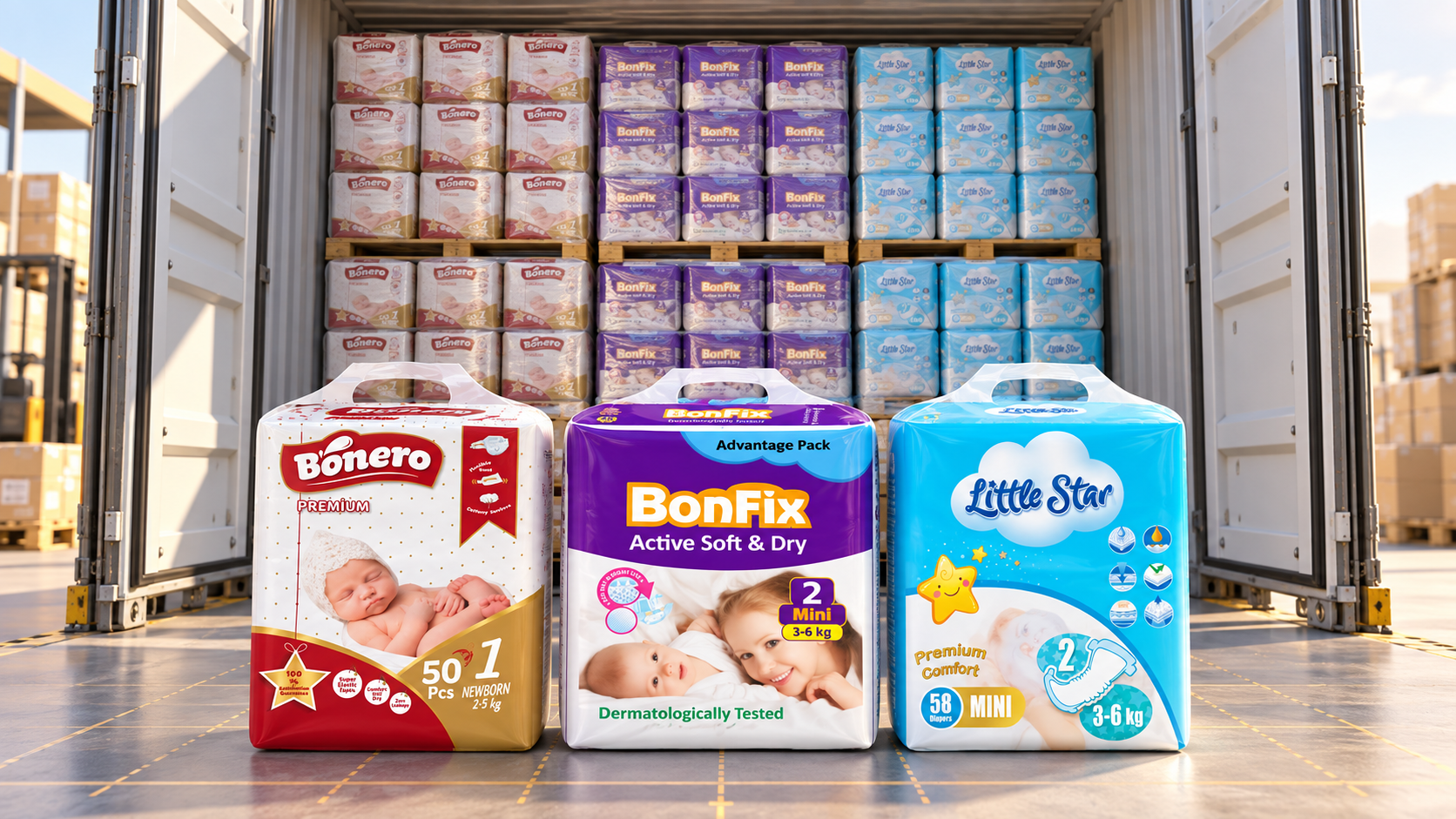
How to Optimize Container Loading When Importing Diapers
Container optimisation should be based on confirmed order and shipment data—not on generic loading estimates. Importers should coordinate carton details, palletisation, container type, weight restrictions, document flow, and delivery requirements with their supplier and logistics partners.
1. Confirm the Order Configuration
Request confirmed pack configuration, carton dimensions, carton weight, and quantity per carton. Do not assume product dimensions, pack counts, or weights.
2. Choose a Loading Method
Discuss whether the shipment will be floor-loaded or palletised. Each method may affect available space, handling process, warehouse requirements, and delivery planning.
3. Confirm the Exact Container Type
Ensure the loading plan is prepared for the agreed container type and shipment arrangement. Avoid using a plan created for a different container configuration.
4. Review Weight and Transport Limits
Container volume is not the only consideration. Confirm applicable weight limits, road-transport requirements, port procedures, and destination-country restrictions with relevant logistics professionals.
5. Request a Written Loading Plan
Ask for a plan showing confirmed carton quantity, pallet quantity where relevant, loading assumptions, and the container arrangement.
6. Coordinate with Your Warehouse
Confirm whether your warehouse can receive the agreed loading method and whether unloading equipment, storage space, and handling procedures are available.
7. Align Documents with the Shipment Plan
Review the commercial invoice, packing list, transport documents, and shipment information against the confirmed loading plan.
8. Review Each Shipment Separately
Recalculate the loading plan whenever order configuration, carton details, palletisation, shipping method, or container type changes.