
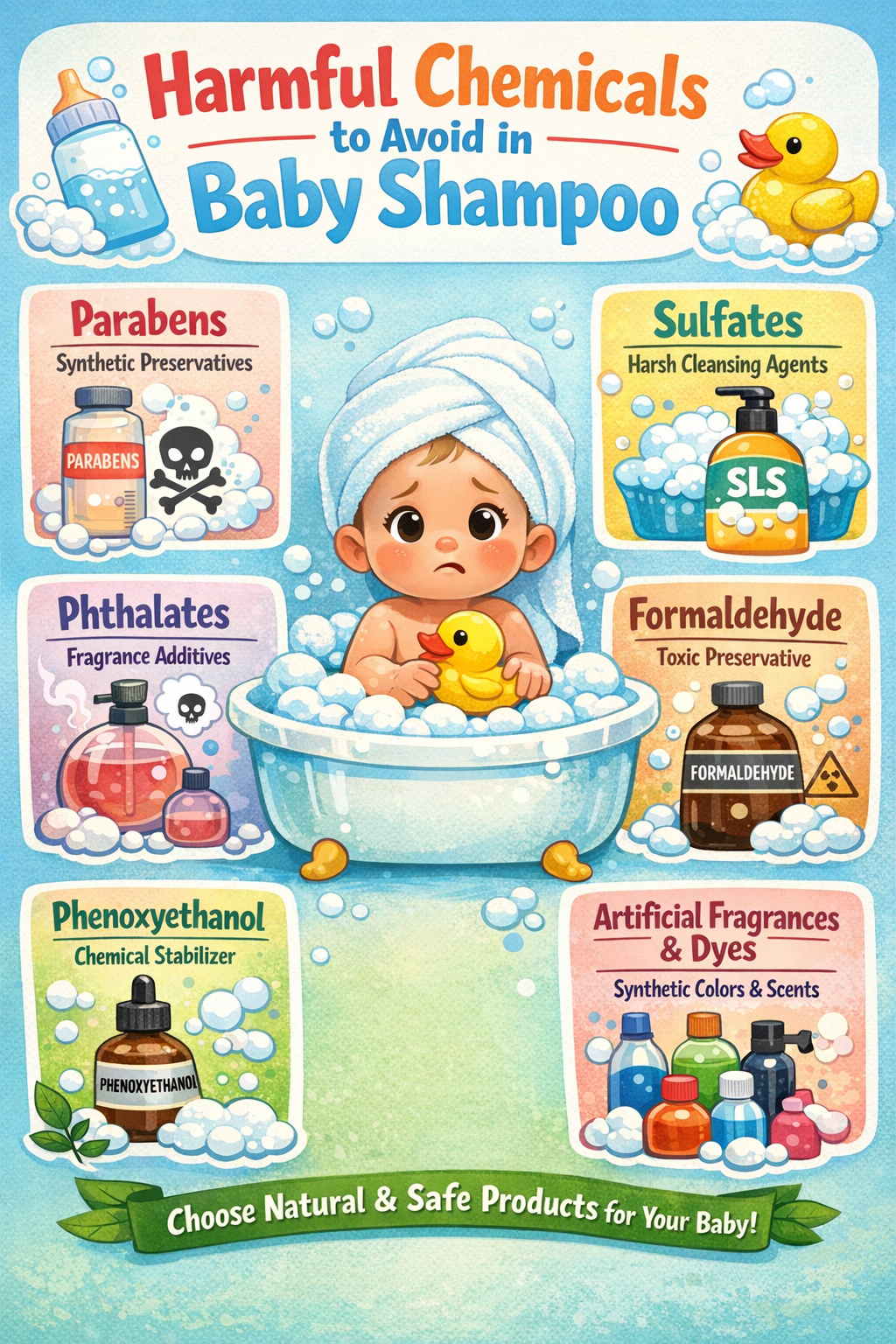
Harmful Chemicals to Avoid in Baby Shampoo
Introduction: Protecting Your Baby’s Sensitive Skin
A baby’s scalp is delicate and highly absorbent. Even brief exposure to harsh chemicals can trigger irritation, dryness, or allergic reactions. For parents, choosing a safe baby shampoo is not just about cleanliness — it’s about protecting your child’s skin and overall health.
This guide identifies the most common harmful chemicals found in baby shampoos and explains why they should be avoided. It also offers alternatives to ensure gentle and effective cleansing for newborns and toddlers.
Why Baby Skin Needs Extra Care
-
Thinner Skin Barrier – Baby skin is up to five times thinner than adult skin, making it more prone to irritation.
-
Higher Absorption – Chemicals applied to the scalp can penetrate deeper and faster.
-
Sensitivity to Irritants – Fragrances, dyes, and strong detergents can trigger rashes, eczema, or dryness.
Choosing shampoos with safe formulations is essential to minimize these risks.
Common Harmful Chemicals in Baby Shampoo
1. Sulfates (SLS and SLES)
-
What They Are: Sodium Lauryl Sulfate (SLS) and Sodium Laureth Sulfate (SLES) are surfactants that create lather.
-
Why Avoid: Can strip natural oils, dry the scalp, and irritate eyes.
-
Better Alternative: Plant-based or mild nonionic surfactants like decyl glucoside or coco-glucoside.
2. Parabens
-
What They Are: Methylparaben, propylparaben, and other parabens are preservatives.
-
Why Avoid: Linked to hormonal disruption in some studies. May irritate sensitive skin.
-
Better Alternative: Natural preservatives like potassium sorbate or phenoxyethanol in safe concentrations.
3. Phthalates
-
What They Are: Often included in fragrances to make scents last longer.
-
Why Avoid: Potential endocrine disruptors.
-
Better Alternative: Fragrance-free shampoos or those with natural essential oils.
4. Formaldehyde and Formaldehyde Releasers
-
What They Are: Preservatives like DMDM hydantoin, imidazolidinyl urea, and quaternium-15 release formaldehyde over time.
-
Why Avoid: Can cause skin irritation and are potential carcinogens.
-
Better Alternative: Organic preservatives that do not release formaldehyde.
5. Synthetic Fragrances
-
What They Are: Artificial scents added to mask odors.
-
Why Avoid: Can cause allergic reactions and skin irritation.
-
Better Alternative: Naturally derived fragrance or fragrance-free options.
6. Artificial Colorants
-
What They Are: Dyes like FD&C Red 40 or Yellow 5.
-
Why Avoid: May irritate skin or trigger allergies in sensitive infants.
-
Better Alternative: No added color or plant-based colorants.
How to Read Baby Shampoo Labels
-
Check the Ingredient List: Ingredients are listed in descending order of concentration. Look for mild surfactants and natural preservatives.
-
Look for Certifications: Labels like USDA Organic, Ecocert, or Halal (where applicable) indicate safer formulations.
-
Avoid Vague Terms: Words like “pure” or “gentle” do not guarantee the absence of harmful chemicals.
-
Fragrance-Free Options: For sensitive skin, fragrance-free is often safest.
Benefits of Choosing Chemical-Free Baby Shampoos
-
Gentle Cleansing: Maintains the natural oils and hydration of baby skin.
-
Reduced Risk of Irritation: Fewer chances of redness, rashes, or eczema flare-ups.
-
Safe for Eyes: Mild formulas are less likely to sting or cause tears.
-
Environmentally Friendly: Many chemical-free formulations use biodegradable ingredients.
Tips for Parents
-
Limit shampoo use to 2–3 times per week for newborns unless necessary.
-
Perform a patch test before using a new product.
-
Avoid using adult shampoos or products not specifically designed for infants.
-
Store shampoo in a cool, dry place to maintain ingredient stability.
Conclusion
Choosing a baby shampoo free from sulfates, parabens, phthalates, formaldehyde releasers, synthetic fragrances, and artificial dyes is essential for protecting your child’s delicate scalp and skin.
Parents can opt for mild, organic, or naturally derived alternatives that cleanse effectively without irritation, supporting healthy hair and skin from the earliest days.
FAQ – Baby Shampoo Chemicals
1. Are all chemicals in baby shampoo harmful?
No, some ingredients are safe and necessary for cleaning. The goal is to avoid harsh or potentially irritating additives.
2. Can sulfates cause tears or eye irritation?
Yes, sulfates like SLS and SLES can sting the eyes and dry the scalp.
3. Are fragrance-free shampoos better for babies?
Yes, they reduce the risk of allergic reactions and irritation.
4. Are organic baby shampoos completely chemical-free?
Not entirely, but they use milder, safer ingredients derived from natural sources.
5. How often should I shampoo my newborn?
Typically 2–3 times per week unless otherwise advised by a pediatrician.