
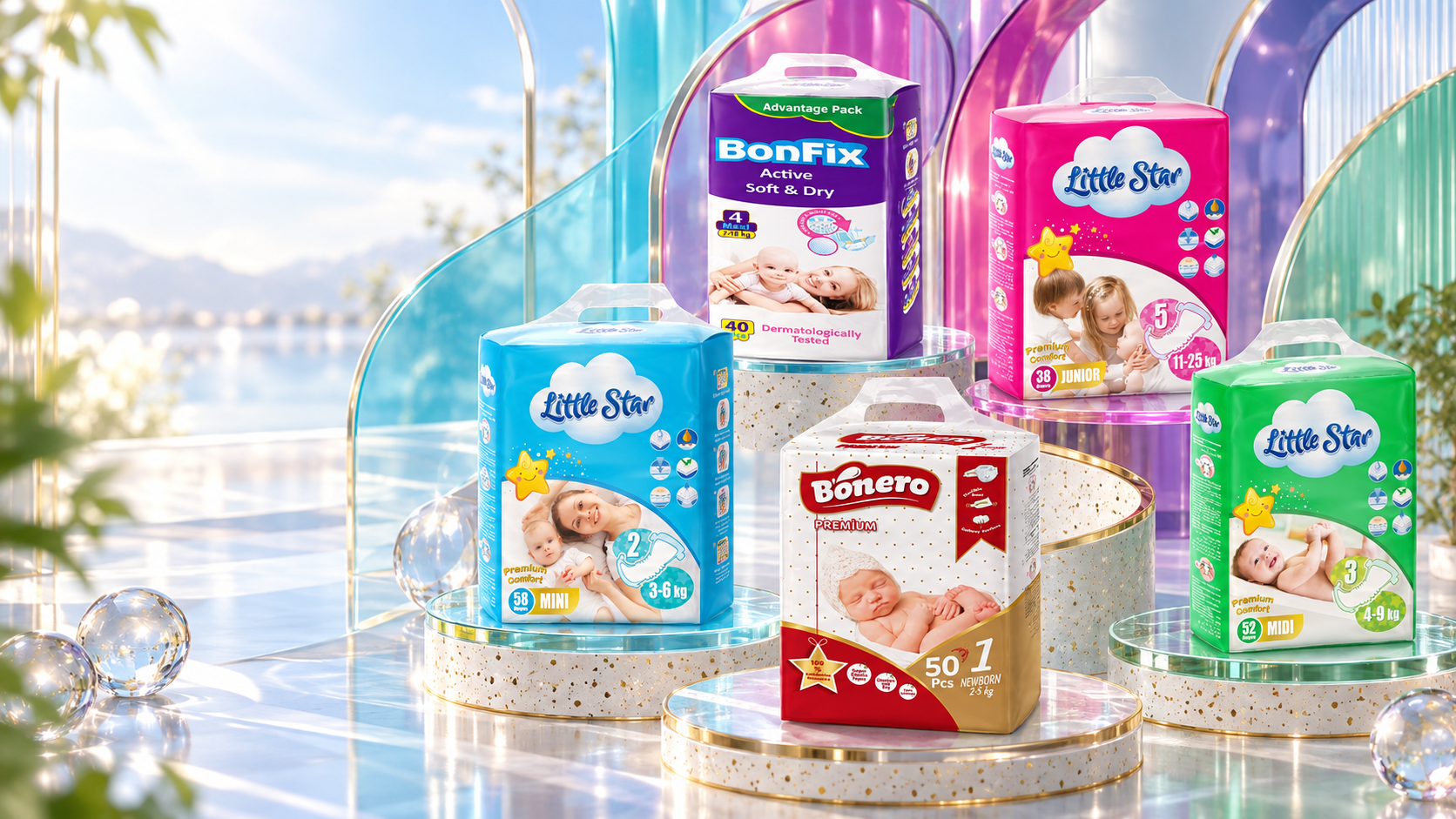
Private Label Baby Diapers: Complete Guide for Importers
Private label baby diapers can support importers, distributors, retail chains, and brand owners seeking to build a market-specific assortment. A successful project requires structured planning around target markets, commercial positioning, packaging, supplier coordination, import requirements, and distribution.
1. Define Your Market Opportunity
Identify your destination country, target buyers, intended sales channels, commercial positioning, local competition, and applicable market-entry requirements.
2. Build a Private Label Brief
Prepare a clear sourcing brief that includes product options to discuss, brand presentation, packaging artwork, labelling requirements, order planning, and relevant project timelines.
3. Select a Suitable Cooperation Model
Discuss whether private label or OEM cooperation is relevant to your business model. Clarify project responsibilities, communication process, packaging workflow, approvals, and commercial coordination.
4. Confirm Product Information
Do not assume product features, materials, performance, certifications, absorbency, dimensions, pack counts, MOQ, or lead times unless directly confirmed by the supplier.
5. Coordinate Packaging and Labelling
Confirm artwork responsibilities, approval stages, language requirements, label information, carton planning, and the obligations applicable in your destination market.
6. Request Samples and Complete Review
Use samples for internal commercial, market, regulatory, and quality evaluation. Define the review criteria and responsible stakeholders before confirming an order.
7. Prepare Import and Logistics Planning
Coordinate commercial documents, shipping terms, customs requirements, warehouse handling, local delivery, and distribution arrangements.
8. Develop the Brand Over Time
Review sales data, distribution feedback, customer feedback, and market performance to guide future orders, packaging updates, and brand development.