
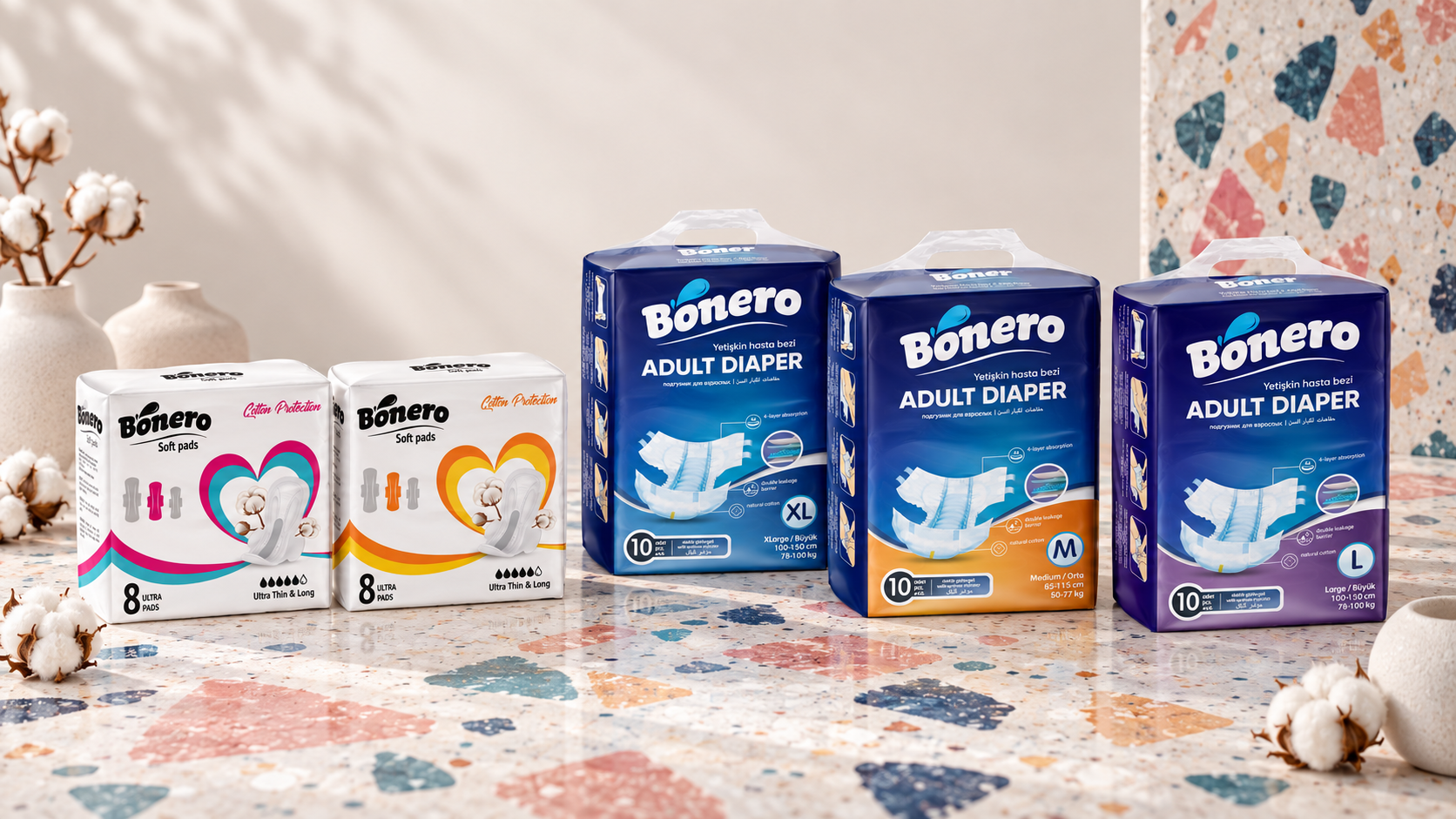
Private Label Adult Diapers: Guide For Distributors
Private label adult diapers can help distributors build a differentiated adult-care range for their own market, customer base, and sales channel. However, a private label project requires more than adding a brand name to a pack. It depends on a clear product brief, confirmed commercial scope, packaging coordination, documentation planning, sample review, and structured communication with the supplier.
This guide is for distributors, importers, healthcare distributors, pharmacies, institutional buyers, and private label buyers exploring adult diaper opportunities.
1. Define The Role Of Your Private Label Range
Start by deciding what role the private label range will play in your business. It may support a distributor brand, complement an existing portfolio, serve a particular buyer group, or create a distinct offer for a specific market.
Clarify your target country, sales channels, target customers, intended price positioning, expected order cycle, and long-term commercial objective. This groundwork helps you make more relevant decisions before discussing packaging or supplier quotations.
2. Prepare A Detailed Private Label Product Brief
A written product brief gives the supplier a clear basis for responding to your enquiry. Include the destination market, intended customer channel, requested product range, brand name status, packaging language requirements, artwork responsibilities, expected order volume, and preferred delivery terms.
Do not assume product composition, dimensions, pack counts, absorbency, certifications, medical status, or performance features. List each technical or regulatory point as an item the supplier must confirm in writing, with supporting documentation where applicable.
3. Clarify Brand, Artwork, And Packaging Responsibilities
Private label projects require clear ownership and approval procedures. Establish who supplies the logo, artwork, translations, barcodes, legal label content, packaging files, and final print approval.
Ask the supplier which packaging formats and artwork specifications they can support, but do not present a format, print method, pack configuration, or labeling capability as confirmed until the supplier has verified it. Keep all approval stages in writing to reduce the risk of errors before production.
4. Verify Market Requirements Before Production
Requirements for product labeling, import documentation, registration, customs clearance, and market access can vary by country and sales channel. Healthcare distribution and pharmacy channels may also have buyer-specific onboarding requirements.
Identify these requirements with appropriate local authorities, advisors, or qualified professionals in your destination market. Then ask the supplier which relevant export documents or product information they can provide and which responsibilities remain with the importer or brand owner.
5. Request Samples And Review Them Structurally
Samples allow distributors to evaluate available options before committing to a bulk private label order. Use a written sample-review process that records what was received, who reviewed it, which criteria were considered, and what points need clarification.
A sample review should not be used to assume future product features, regulatory approval, or every production outcome. If laboratory, regulatory, institutional, or technical validation is required, arrange it through appropriately qualified parties.
6. Compare Private Label Quotations Beyond Unit Price
A private label quotation should be assessed as a full commercial scope, not only as a unit price. Compare the requested product description, packaging scope, artwork status, document scope, sample status, delivery basis, payment terms, estimated production timing, and any unanswered questions.
A lower price may not represent a lower total project cost if important elements are excluded or unclear. A comparison sheet helps distributors identify differences before selecting a supplier.
7. Plan Communication And Change Control
Private label distribution depends on consistent coordination. Before placing an order, agree on primary contacts, approval steps, communication timing, artwork revisions, packaging updates, document changes, and procedures for future orders.
Documenting these points helps protect brand consistency and makes repeat orders easier to manage. It also ensures that commercial or packaging changes are not treated as assumptions.
Build A Controlled Private Label Process
A well-managed private label adult diaper project starts with a clear market plan and continues through confirmed supplier information, packaging approvals, documentation checks, sample review, and transparent commercial planning.