
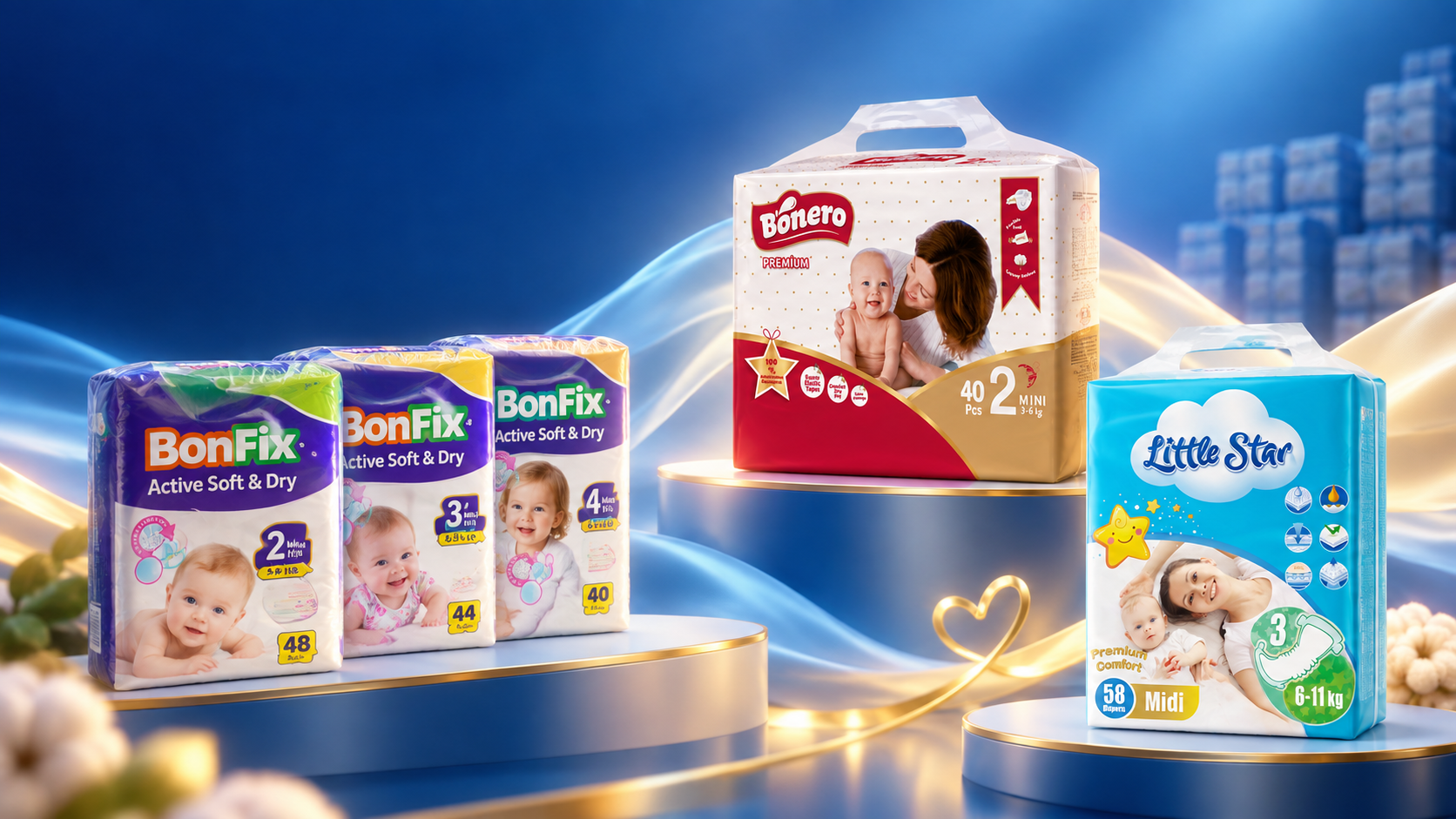
Jumbo Packs vs Small Diaper Packs: Which Sell Better in Your Channel?
There is no universal answer to whether jumbo packs or small diaper packs sell better. The suitable pack strategy depends on the target market, customer profile, sales channel, retail environment, price architecture, warehouse operations, and distribution model.
Importers, distributors, wholesalers, supermarket and retail chains, and private-label buyers should evaluate pack strategy using their own market research and commercial data.
1. Define Your Target Channel
Identify where the range will be sold: wholesale, supermarket, retail chain, pharmacy, distributor network, or another relevant channel. Each channel can have different requirements for shelf planning, replenishment, storage, and customer expectations.
2. Review Your Customer and Market Strategy
Use your own research to understand how your target customers make purchasing decisions. Avoid assuming that one pack format automatically suits every market or price segment.
3. Plan Commercial Positioning
Consider how each pack format fits your intended commercial position, brand strategy, route to market, and planned price architecture.
4. Review Packaging and Carton Planning
Discuss pack format, label information, carton planning, outer-carton identification, warehouse handling, and shelf presentation with relevant suppliers and retail partners.
Do not assume pack counts, carton quantities, dimensions, or weights unless directly confirmed.
5. Assess Logistics and Distribution
Compare confirmed carton data, palletisation, container loading, transport arrangements, warehouse storage, local delivery, and replenishment planning for each proposed pack format.
6. Request Samples and Packaging Proofs
Use representative samples, packaging proofs, and supplier-confirmed information for your internal commercial, market, regulatory, and quality review.
7. Test Through Your Own Commercial Process
Where possible, assess the proposed pack formats through your own retail, distributor, or market-evaluation process before making a long-term purchasing decision.
8. Review Results and Adjust Future Orders
Use sales data, retail feedback, warehouse experience, distribution performance, and customer feedback to refine future pack planning.