
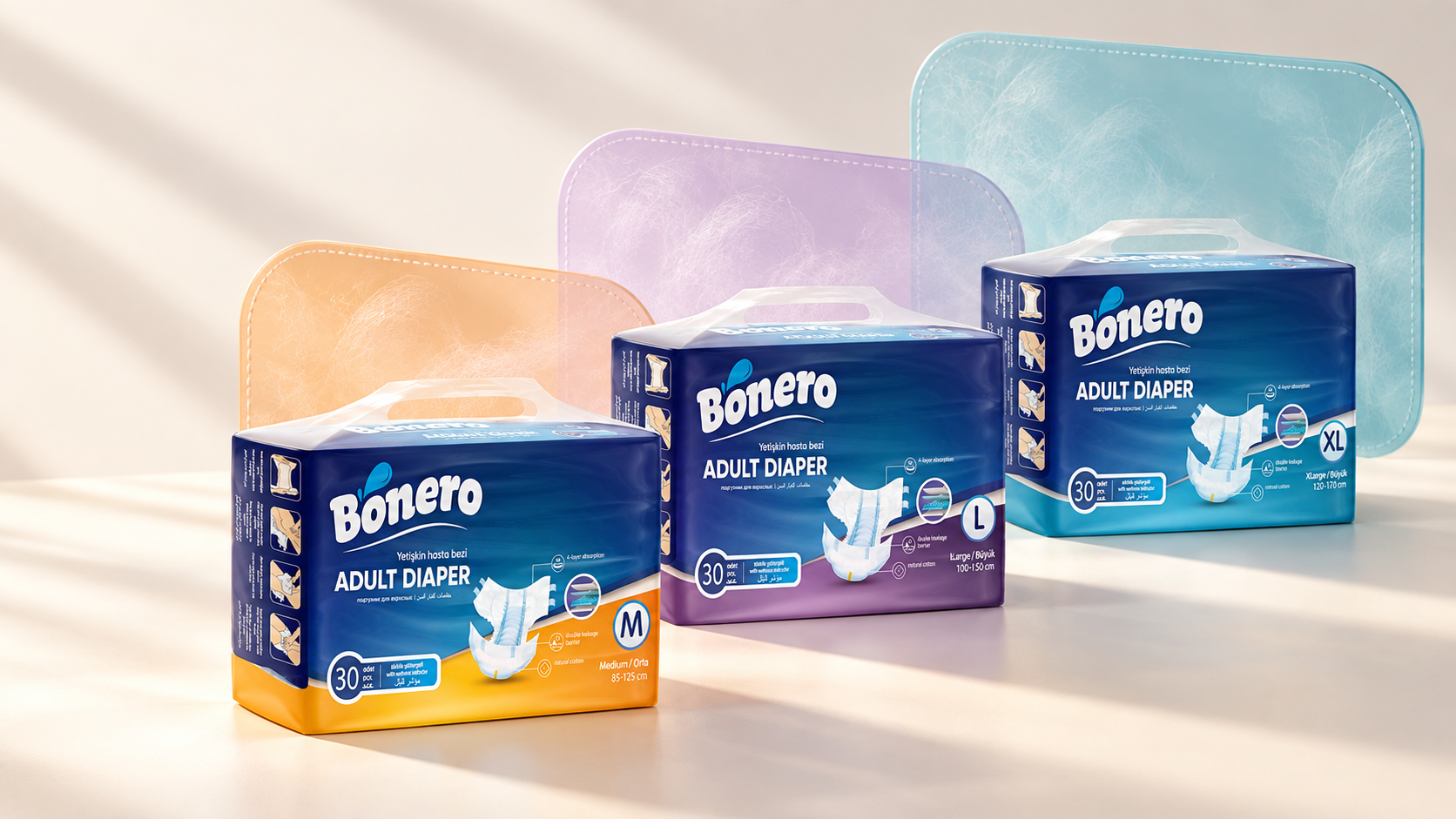
How To Select Adult Diaper Sizes For Wholesale Distribution
Selecting an adult diaper size assortment for wholesale distribution is a commercial planning decision as well as a sourcing decision. Wholesalers need to balance market demand, buyer expectations, supplier availability, packaging requirements, warehouse capacity, and the risk of carrying an unnecessarily complex range.
This guide is designed for wholesalers, importers, healthcare distributors, pharmacies, institutional buyers, and adult-care product buyers planning an adult diaper size assortment.
1. Begin With Your Target Channel And Market
Start by identifying where and to whom your range will be sold. A pharmacy network, healthcare distributor, institutional buyer, wholesaler, or retail chain may have different range expectations and purchasing patterns.
Review your destination market, sales channel, customer profiles, expected order frequency, available storage capacity, and commercial positioning. These factors should guide your assortment planning before you request size information from suppliers.
2. Request Confirmed Supplier Size Information
Ask suppliers for their available adult diaper size information, size charts, packaging details, and product documentation relevant to the options under consideration. Ensure that all information is provided in writing and clearly linked to the specific product format.
Do not assume dimensions, body measurements, sizing labels, pack counts, material composition, or product performance based on a size name alone. A size label can be presented differently by different suppliers and for different product formats.
3. Compare Size Ranges On A Like-For-Like Basis
When comparing suppliers, review each proposed size range alongside the associated product description, packaging information, sample availability, commercial terms, and documentation scope. Avoid comparing labels alone without checking what the supplier confirms for each option.
Create a comparison sheet that separates confirmed data from questions that still need clarification. This helps prevent purchasing decisions based on inconsistent or non-comparable size information.
4. Build A Manageable Assortment
A broader assortment can create more choice, but it can also increase inventory complexity. Start by deciding whether your market needs a focused entry range, a broader wholesale range, or a staged launch that can be expanded after sales feedback is available.
Your final assortment should reflect confirmed supplier availability and your own sales, inventory, and distribution plan. Avoid committing to additional options before commercial demand and supply conditions are sufficiently understood.
5. Review Packaging And Labeling Requirements
Size communication should be clear for the intended market and sales channel. Review packaging language, product naming, size presentation, barcode requirements, and any local labeling obligations with appropriate local advisors or authorities.
For private label projects, determine who is responsible for artwork, translations, label content, packaging files, and final approval. Do not assume a particular packaging format or labeling capability until the supplier confirms it.
6. Use Samples To Support Internal Evaluation
Samples can help your team review the supplier’s available size options before placing a bulk order. Use a written evaluation process that identifies the samples received, the reviewers involved, the criteria assessed, and the questions that remain open.
A sample review should not be treated as proof of every future production, regulatory, or market requirement. Where specific validation is required, engage appropriately qualified local professionals, laboratories, or advisors.
7. Plan Inventory And Repeat Orders
Before ordering, estimate how each size option will affect storage, inventory turnover, warehouse receiving, distribution planning, and future replenishment. A range that is suitable on paper may be difficult to manage if order cycles or storage capacity are limited.
Agree with the supplier how availability updates, packaging revisions, product changes, forecast changes, and repeat-order communication will be managed. Written coordination helps wholesalers control their assortment over time.
Select Sizes With Confirmed Information
A successful adult diaper size assortment is built on market knowledge, confirmed supplier information, practical packaging planning, and controlled inventory decisions. Do not rely on size names alone—evaluate every option within its full commercial and product context.