
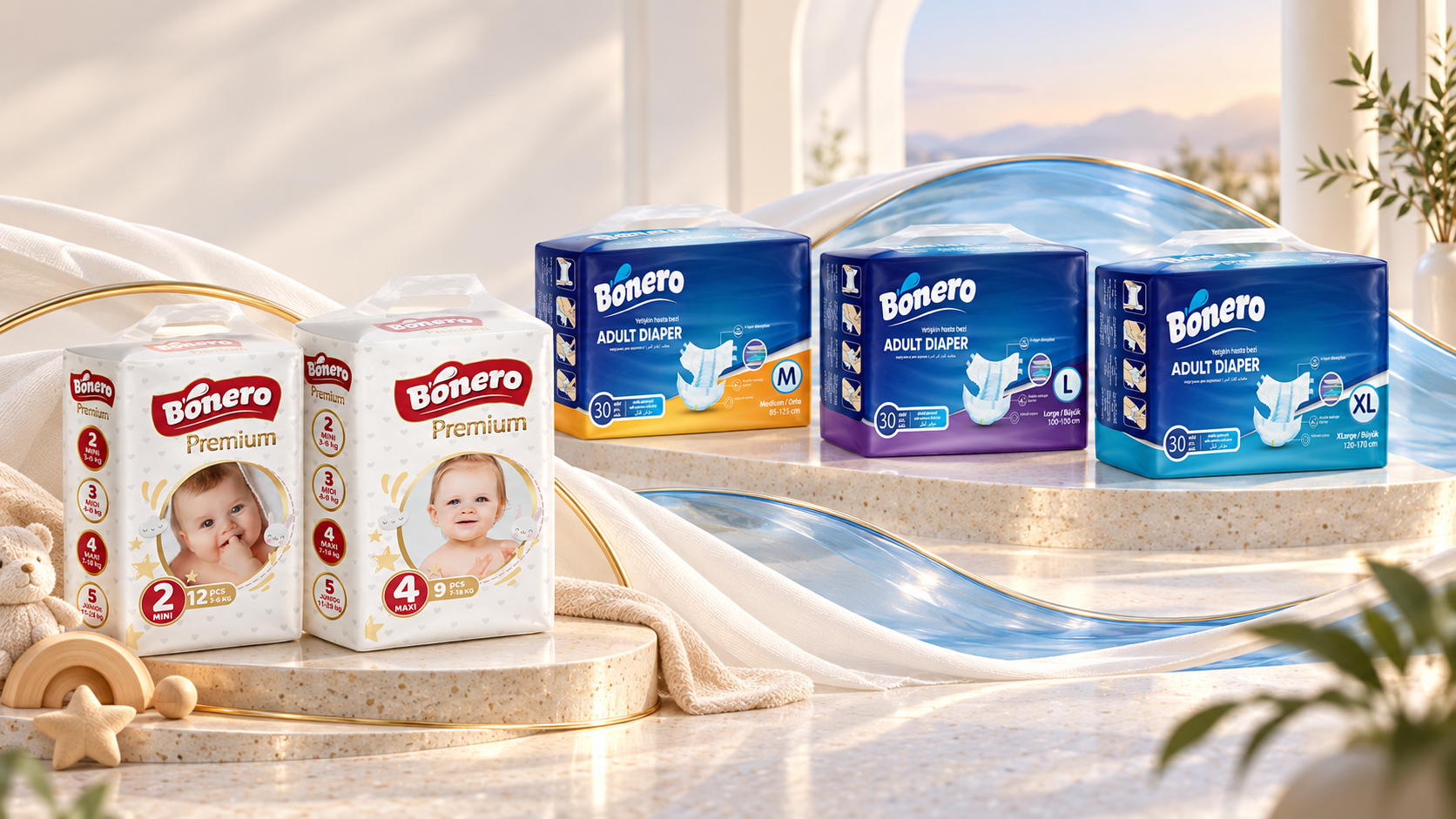
How Diaper Thickness Affects Cost, Shipping and Consumer Perception
Diaper thickness is one product attribute that may be relevant to B2B sourcing discussions. Its commercial implications depend on the confirmed product configuration, packaging, carton dimensions, loading plan, shipping method, target market, and buyer expectations.
Buyers should not assume that thickness alone confirms performance, material composition, absorbency, comfort, certifications, or product quality.
1. Confirm the Product Configuration
Request supplier-confirmed product information relevant to your project. Do not assume thickness, materials, performance, dimensions, pack counts, or other specifications.
2. Review Packaging and Carton Planning
Where thickness information is confirmed, discuss how the agreed product configuration affects pack format, carton dimensions, carton quantity, and warehouse handling.
3. Assess Shipment Planning
Shipping planning should use confirmed carton data, palletisation approach, container type, loading method, weight limits, and delivery requirements.
4. Calculate Landed Cost Separately
Product price, packaging, transport, insurance, customs, taxes, local handling, and delivery can affect landed cost. Do not use thickness as a substitute for a complete cost calculation.
5. Define Your Market Positioning
Assess consumer perception through your own market research, sales-channel strategy, sample review, and commercial positioning rather than generic assumptions.
6. Request Samples
Use representative samples for internal commercial, market, regulatory, and quality evaluation. Define your criteria before making a purchasing decision.
7. Compare Suppliers Consistently
Use the same sourcing brief and evaluation criteria when comparing supplier offers, samples, packaging options, and logistics plans.
8. Document Confirmed Details
Record supplier-confirmed product, packaging, carton, shipment, document, and commercial details before a bulk order.