
The Absorbency Technology in Baby Diapers: A Practical B2B Guide for Importers & Distributors
For importers, distributors, wholesalers and retail chains, baby diapers are not just a fast-moving consumer product. They are a high-volume, high-repeat category that directly affects brand reputation, customer loyalty and cash flow stability.
In markets across Africa, the Middle East and Latin America, buyers are increasingly sensitive to quality — especially absorbency performance. Leakage complaints, skin irritation or poor night performance can quickly damage a distributor’s credibility.
Understanding absorbency technology in baby diapers is therefore not a technical luxury. It is a strategic purchasing decision.
This guide explains how diaper absorbency works, what materials matter most, and what B2B buyers should evaluate before selecting a manufacturer.
Why Absorbency Technology Matters for B2B Buyers
When evaluating a baby diaper manufacturer, pricing is important — but performance consistency is critical.
Poor absorbency leads to:
-
High complaint rates
-
Product returns
-
Retailer dissatisfaction
-
Brand damage
-
Loss of repeat orders
In competitive retail environments, especially in price-sensitive markets, distributors must balance cost and performance. The key is understanding the core absorbent system.
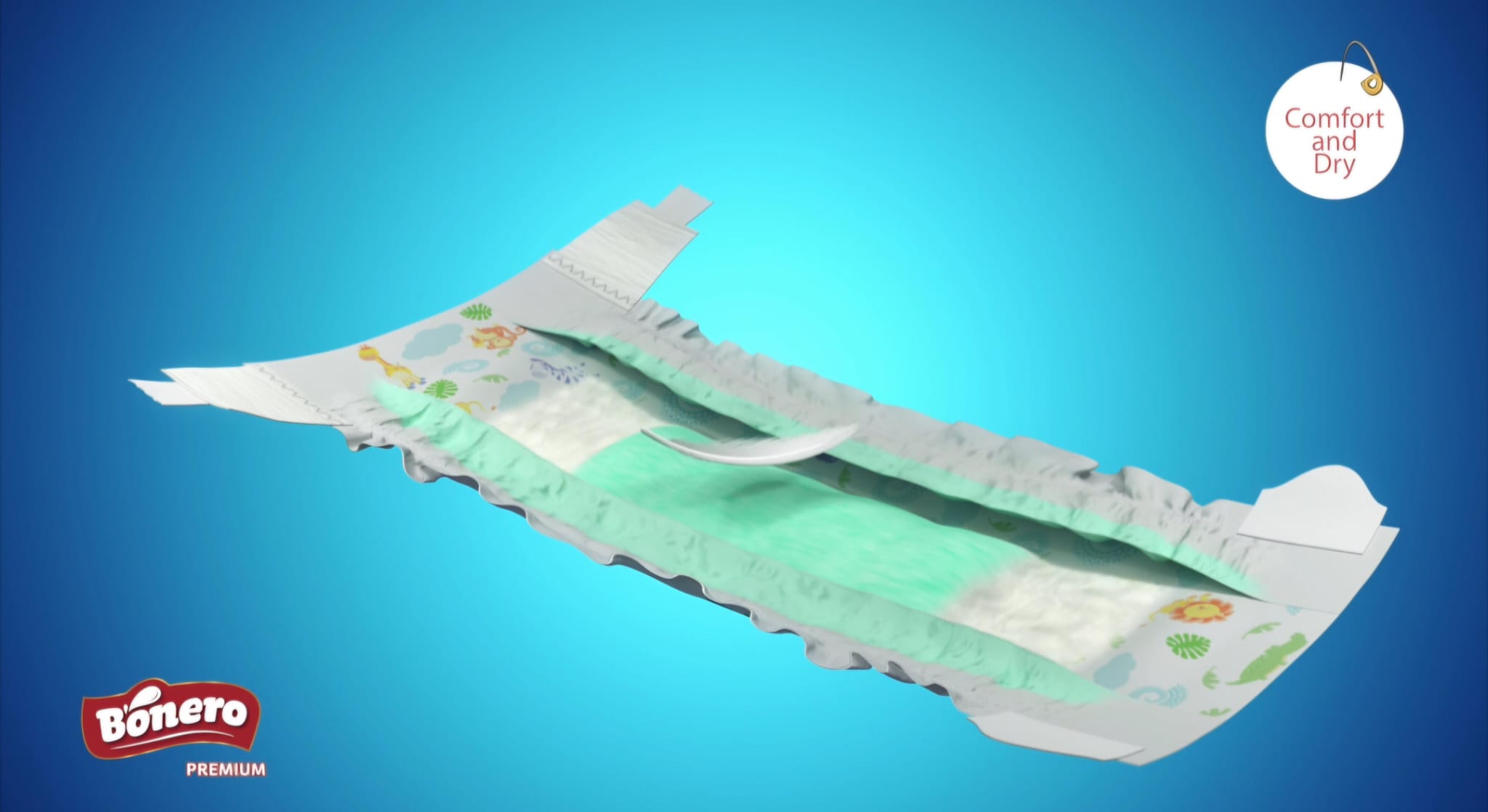
The Structure of a Modern Baby Diaper
To understand absorbency technology, you need to understand diaper structure. A modern disposable baby diaper typically consists of:
-
Top sheet (skin-contact layer)
-
Acquisition and distribution layer (ADL)
-
Absorbent core
-
Back sheet
-
Elastic components and fastening system
The absorbent core is the heart of performance.
What Is Inside the Absorbent Core?
The absorbent core usually contains:
1. Fluff Pulp
Fluff pulp is a cellulose-based material that helps distribute liquid evenly. It provides structure and initial absorption.
Advantages:
-
Good liquid distribution
-
Cost-effective
-
Stable structure
However, fluff pulp alone cannot deliver high-capacity absorption for modern performance standards.
2. Super Absorbent Polymer (SAP)
Super Absorbent Polymer (SAP) is the key material behind modern diaper technology. SAP can absorb and retain liquid many times its own weight.
When liquid contacts SAP:
-
It transforms into gel
-
It locks moisture inside
-
It reduces rewet (liquid returning to surface)
The balance between fluff pulp and SAP determines performance level and cost structure.
Core Absorbency Technologies in the Market
Different manufacturers use different absorbency structures. As a B2B buyer, understanding these variations helps you position products correctly in your market.
Conventional Core (Fluff + SAP Blend)
-
Higher fluff content
-
Moderate SAP ratio
-
Suitable for economy and mid-range diapers
-
Thicker product
Best for:
-
Price-sensitive markets
-
Daytime use positioning
-
Entry-level private label programs
High SAP Core (Ultra-Thin Technology)
-
Higher SAP concentration
-
Reduced fluff
-
Thinner diaper
-
Higher absorption capacity
Best for:
-
Premium positioning
-
Night diapers
-
Urban retail chains
-
Markets demanding thinner, modern design
Channel or Structured Core Design
Some diapers feature embossed channels that:
-
Distribute liquid faster
-
Prevent liquid pooling
-
Improve shape retention
-
Enhance comfort
This technology reduces leakage risk, especially during overnight use.
Key Absorbency Performance Indicators for Importers
When discussing diaper absorbency technology with a manufacturer, focus on measurable performance criteria rather than marketing claims.
1. Total Absorption Capacity
How much liquid can the diaper hold under laboratory conditions?
Note: Lab capacity differs from real-life performance, but it gives a baseline comparison.
2. Absorption Speed
How quickly does the core absorb liquid?
Slow absorption may cause:
-
Surface wetness
-
Baby discomfort
-
Leakage
3. Rewet Performance
Rewet measures how much moisture returns to the top sheet after pressure is applied.
Low rewet =
-
Better skin dryness
-
Reduced rash risk
-
Higher consumer satisfaction
4. Leakage Control
Absorbency must work together with:
-
Leg cuffs
-
Elastic barriers
-
Proper fit
Technology is not only about core material — it is about overall system design.
Matching Absorbency Level to Market Strategy
Not every market requires maximum SAP concentration. The right absorbency level depends on:
-
Consumer purchasing power
-
Climate conditions
-
Cultural habits
-
Competing brands in the market
-
Target price point
Example: Africa
In many African markets:
-
Price sensitivity is high
-
Bulk packaging is preferred
-
Mid-level absorbency often performs best commercially
Example: Middle East
Consumers may expect:
-
Higher performance
-
Better night protection
-
Thinner structure
Example: Latin America
There is strong competition between local brands and imports. Balanced positioning (good absorbency at competitive cost) is often the winning strategy.
Private Label and Absorbency Customization
For distributors building their own diaper brand, absorbency technology can be customized according to:
-
Target price tier
-
Packaging size
-
Market positioning
-
Competing products
A serious baby diaper manufacturer should offer flexibility in:
-
SAP ratio
-
Core weight
-
Diaper thickness
-
Size range
-
Packaging configuration
Private label programs allow importers to differentiate while maintaining control over margin.
Quality Control and Production Standards
Absorbency performance is not only about raw materials. Consistency in production is equally important.
When selecting a manufacturer, B2B buyers should evaluate:
-
Production line technology
-
Raw material sourcing stability
-
In-line quality testing
-
Batch consistency
-
Export experience
Professional manufacturers follow structured quality management systems and conduct regular absorbency testing during production.
It is advisable to request:
-
Technical data sheets
-
Sample testing
-
Performance comparison reports
Never rely only on brochures.
Logistics and Export Considerations
Absorbency technology impacts logistics in several ways.
Higher SAP and thinner cores may result in:
-
Reduced diaper thickness
-
More pieces per container
-
Lower freight cost per unit
For exporters, container optimization is a strategic advantage.
Importers should ask:
-
How many packs per 40HQ container?
-
What is the cubic volume per pack?
-
Can packaging be optimized for freight efficiency?
Efficient absorbency design can improve not only performance but also supply chain economics.
Why Work with a Turkish Manufacturer?
Turkey has become a strong hub for hygienic products manufacturing due to:
-
Strategic geographic location
-
Access to European and Middle Eastern raw materials
-
Export-oriented production culture
-
Competitive cost structure
For buyers in Africa, the Middle East and Latin America, working with a Turkish manufacturer offers:
-
Shorter transit times compared to Far East suppliers
-
Flexible MOQ options
-
Faster communication
-
Strong export experience
A reliable Turkish diaper manufacturer understands international compliance requirements and long-term distribution partnerships.
Common Mistakes B2B Buyers Make
-
Choosing based on price only
-
Ignoring rewet performance
-
Not testing samples under local conditions
-
Overestimating the need for premium SAP in economy markets
-
Failing to align product performance with retail positioning
Absorbency technology must align with your brand strategy — not just your procurement budget.
Final Thoughts: Absorbency Technology Is a Strategic Decision
For importers and distributors, understanding diaper absorbency technology is essential to long-term success.
The right absorbent core structure:
-
Protects your brand reputation
-
Reduces customer complaints
-
Supports repeat orders
-
Improves margin stability
-
Strengthens retailer relationships
Before finalizing your next order, evaluate the core technology — not just the unit price.
If you are sourcing baby diapers for distribution or private label development, work with a manufacturer that understands both product engineering and export realities.
Contact us today to discuss your target market, absorbency requirements and private label opportunities. Our team is ready to support your next diaper import program with tailored solutions and export-ready production.
FAQ – Absorbency Technology in Baby Diapers
1. What is SAP in baby diapers?
SAP (Super Absorbent Polymer) is a material used in the absorbent core that locks liquid into gel form, preventing leakage and reducing surface wetness.
2. Is higher SAP always better?
Not necessarily. Higher SAP increases absorption but also cost. The right balance depends on your target price segment and market expectations.
3. How can importers test absorbency quality?
Importers should request product samples and conduct practical testing, including absorption speed, rewet and overnight performance trials.
4. Does absorbency affect shipping cost?
Yes. Thinner high-SAP diapers can increase container loading efficiency and reduce freight cost per piece.
5. Can absorbency levels be customized for private label?
Yes. Many manufacturers offer customization of SAP ratio, core weight and thickness to match specific market needs and price positioning.