
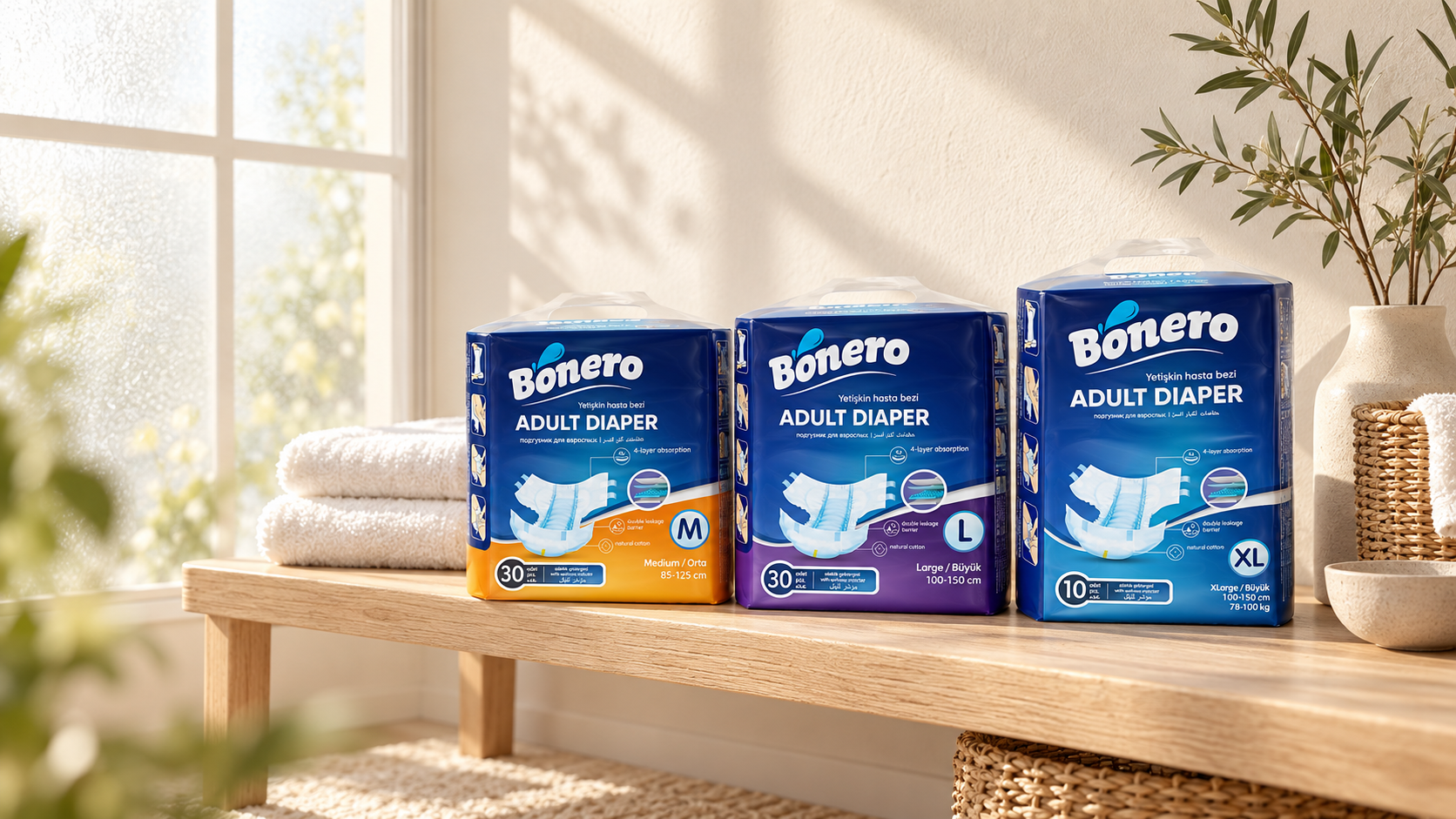
How To Import Adult Diapers From Turkey
Importing adult diapers from Turkey requires a clear B2B sourcing process. Beyond selecting a supplier, importers need to align product requirements, documentation, shipping terms, customs responsibilities, sample evaluation, and commercial expectations before placing a bulk order.
This guide is intended for importers, healthcare distributors, pharmacies, institutional buyers, wholesalers, and adult-care product buyers evaluating adult diaper sourcing from Turkey.
1. Define Your Target Market And Sales Channel
Start by identifying the country where the products will be sold and the channel you intend to serve. Healthcare distributors, pharmacies, institutional buyers, wholesalers, and retail chains may have different requirements for labeling, documentation, packaging language, registration, and purchasing processes.
Create a market-entry checklist before contacting suppliers. Include local import requirements, buyer expectations, preferred sales channel, expected order frequency, and any points requiring confirmation from local authorities or qualified advisors.
2. Prepare A Clear Import Sourcing Brief
A clear sourcing brief allows suppliers to understand the information you need. State your destination market, intended buyer channel, requested product range, packaging language needs, target commercial positioning, estimated order volume, and preferred delivery terms.
Do not assume product composition, absorbency, dimensions, pack counts, certifications, medical status, or performance features. Ask the supplier to confirm each relevant product point in writing and provide supporting documentation where applicable.
3. Identify Suitable Adult Diaper Suppliers In Turkey
When reviewing suppliers, focus on their ability to respond clearly to B2B enquiries and explain their export process. Ask about their adult-care product offering, quotation procedure, sample process, communication contacts, documentation availability, and shipment coordination.
A supplier should be evaluated on the clarity and consistency of their written responses, not only on the initial price. Unclear answers should be resolved before they become part of an order agreement.
4. Request Product Information And Samples
Request available product information, packaging details, sample options, and documentation relevant to your intended market. Samples can support internal comparisons, buyer presentations, and preliminary evaluation before a bulk order.
Use a written sample-review process. Record what was received, who reviewed it, which requirements were assessed, and which points remain subject to supplier confirmation or local validation. Do not treat a sample as proof of all future production or regulatory requirements.
5. Confirm Import Documents And Responsibilities
Import document requirements vary by destination country, product classification, and sales channel. Before ordering, identify which documents may be required for customs clearance, market access, labeling, registration, or buyer onboarding.
Ask the supplier what export-related documents they can provide and which actions remain the importer’s responsibility. Confirm responsibilities early to avoid delays after production or shipment planning has started.
6. Compare Commercial Quotations Correctly
Compare quotations only after confirming that each supplier is pricing the same requested scope. Review the product description, pack configuration, delivery basis, payment terms, sample status, document scope, estimated production timing, and shipment conditions.
Keep a comparison sheet that separates confirmed details from open questions. This will help you avoid choosing a quotation based on an incomplete or non-comparable price.
7. Agree Delivery Terms And Logistics Planning
Discuss the delivery term, port or destination point, shipping timeline, document handover, freight coordination, and communication process before confirming the order. The chosen delivery arrangement should clearly define which party is responsible for each stage.
Importers should also plan for customs procedures, local transport, warehouse receiving, and inventory timing in their destination market. Freight, insurance, duties, taxes, and local handling costs should be assessed separately from the supplier’s product quotation.
8. Establish A Process For Repeat Orders
A successful first shipment should become the basis for a controlled repeat-order process. Agree how product updates, packaging changes, document revisions, forecast changes, and delivery expectations will be communicated.
For long-term sourcing, keep written records of confirmed commercial points and review them before each new order. This helps importers maintain consistency while reducing avoidable misunderstandings.
Plan Before You Place A Bulk Order
Importing adult diapers from Turkey is easier to manage when each part of the process is documented: market requirements, supplier responses, samples, quotation scope, document responsibilities, and logistics planning.