
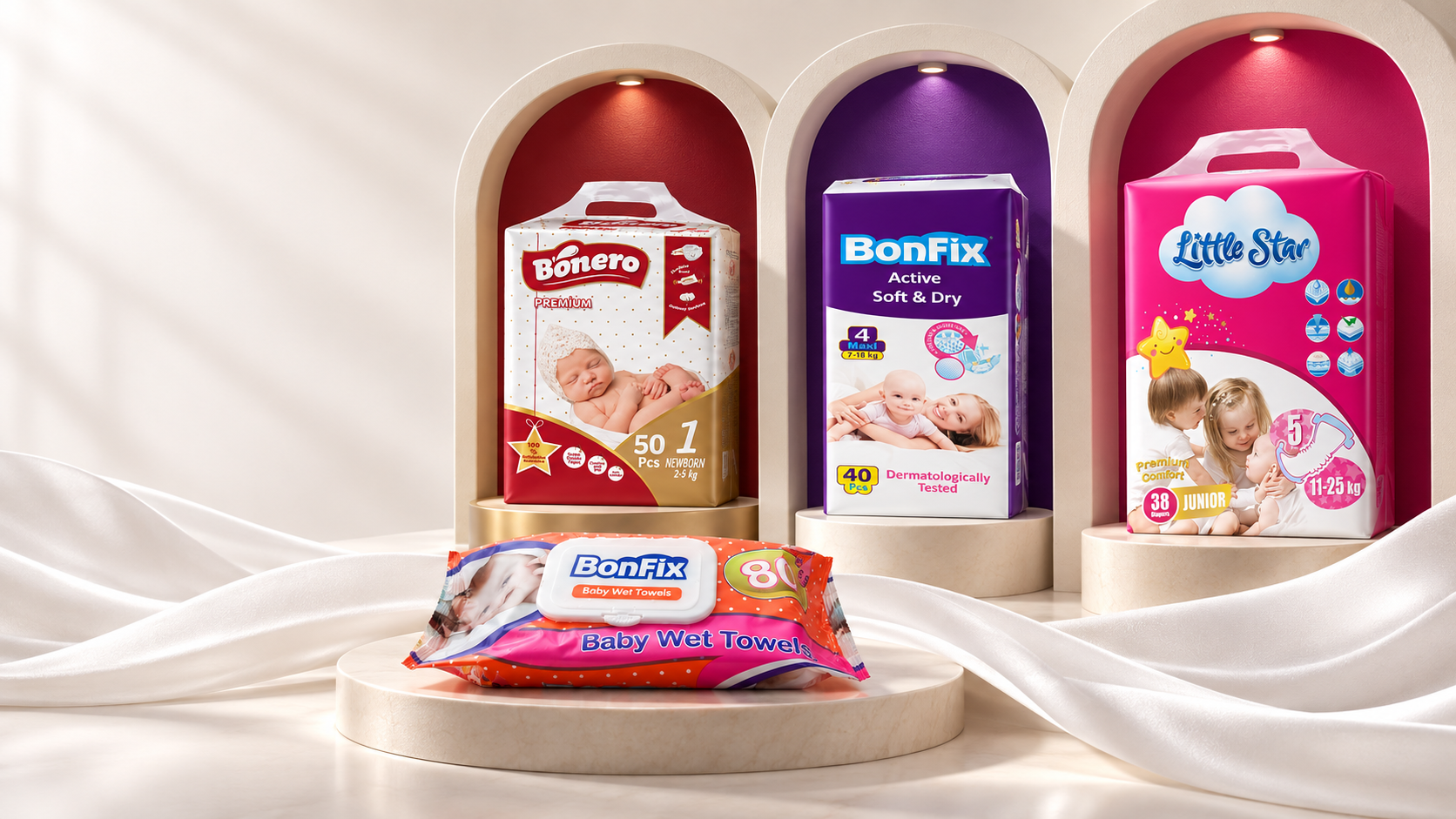
How To Build Economy, Standard And Premium Diaper Tiers
Economy, standard and premium are commercial positioning tiers, not universal technical product specifications. Importers, distributors, wholesalers, supermarket and retail chains, and private-label buyers should define each tier based on their own market research, channel strategy, customer profile, and commercial goals.
1. Define Your Target Market
Identify the destination country, customer segments, sales channels, retail environment, competitive context, and applicable market-entry requirements.
2. Set Commercial Criteria For Each Tier
Define how your business will distinguish economy, standard, and premium positions using commercial criteria such as brand strategy, packaging approach, route to market, and price architecture.
3. Build A Market-Specific Assortment Brief
Prepare a sourcing brief covering the categories you want to discuss, packaging needs, label information, purchasing plan, and whether private-label or OEM cooperation is relevant.
4. Avoid Unverified Product Claims
Do not assume materials, performance, certifications, absorbency, dimensions, pack counts, skin suitability, or other product claims unless directly confirmed by the supplier.
5. Plan Packaging And Carton Strategy
Review brand presentation, pack formats, label information, carton planning, warehouse handling, and shelf strategy for each commercial tier.
6. Request Samples For Internal Review
Use representative samples to support your own commercial, market, regulatory, and quality evaluation. Apply consistent criteria across tiers.
7. Align Tiers With Logistics And Distribution
Compare confirmed carton data, palletisation, container loading, storage, local delivery, and replenishment needs for each planned tier.
8. Review And Adjust Your Strategy
Use sales data, distribution feedback, retail feedback, and market performance to refine tier structure and future purchasing plans.